
Why buy when you can diy?
Maxine Kehoe / The Samohi
Art by Sara Polster
The art of the creative Halloween costume fuels the spirit of the holiday as a fun and essential tradition that can be enjoyed by all. The individuality that comes from developing an ensemble allows one to bring their vision to life while expressing their interests and ingenuity in a joyous way. The modern day rarity of these do-it-yourself, or DIY, costumes comes with the rise of a commercialized approach to the festivities, forgoing the inventive process of fabricating a costume with the quick fix of buying one online.
The earliest known form of the Halloween regalia came from ancient celtic customs where people dressed in animal skins for the festival of Samhain, but its more modern form originated in the early 20th century. American habits in the 1920s and ’30s gave rise to masquerade balls in which costuming for adults and children alike became commonplace and mass-produced outfits became more mainstream. The popularity of homemade disguises first took off during the early ’40s, as the struggling WWII-era economy led many American children to put together masks, old clothes and other accessories to form their costumes instead of buying one from a store.
From the ’50s through the end of the century however, the culture behind Halloween costumes reverted mainly to store-bought garments that became increasingly tied to pop-culture icons as opposed to general symbols of the holiday. These values expanded vastly to include slasher and horror icons like Halloween’s Michael Meyers, leading to the standardization of many costumes to be produced as a full set. Stores would churn out these full uniforms to replicate existing characters, moving costuming further away from the uniqueness of distinct outfits.
Interestingly, the increase in horror as a genre in movies and general pop-culture later shifted the state of costuming back to a self-made approach through the addition of social media. The DIY costume found a resurgence on early 2000s/10s Tumblr and Pinterest boards which spread inspiration and fostered a more mainstream love of pop-culture properties. Mixing online aesthetics to these pop-culture fandoms brought back the making of original disguises, shifting its purpose from its original intentions of the ’40s. Instead of solely repurposing old clothes as a result of economic hardship, this new form of self assembling one’s costume was a sign of love for established culture.
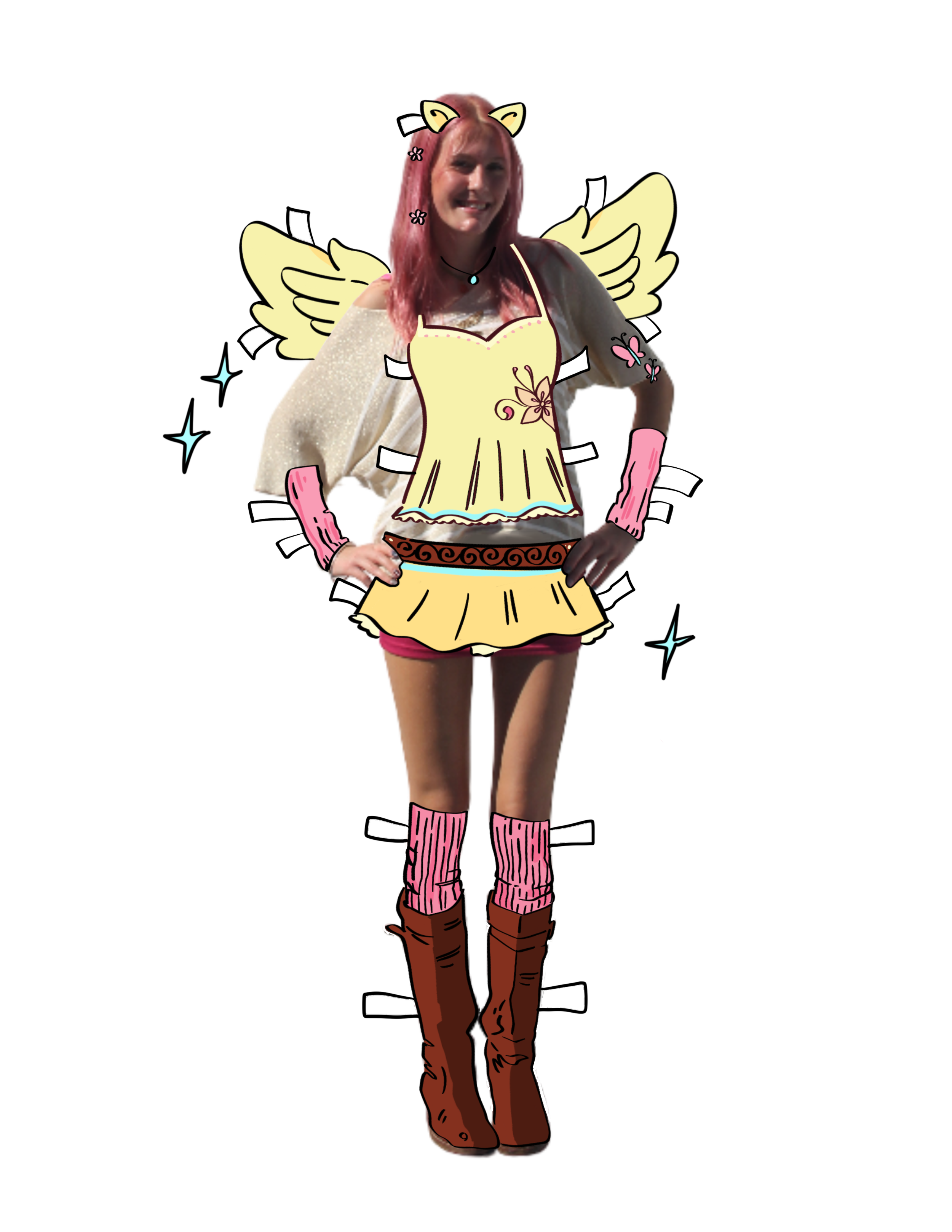
People also used festive attire as an outlet for creativity and repurposed old clothes with new pieces as a way to bring a character to life. Instead of buying one outfit set from a specific store or online, people began to shop around for singular pieces and give them a new purpose as part of a larger vision. The use of social media styles and imaginative content led to a widespread exchange of ideas which blended into the resurgence of this costuming. Inspiration spread to people constructing grander disguises and pushing the boundaries of their experimentation. Samo student Veronika Brandt (’26) talks about how this culture influenced her own DIY costume this year.
“Ive seen a lot of people, especially on Etsy and stuff, create their own wings and their own stuff so I feel like I have inspo online,” Brandt said. “Its a cool community and it's also just inspiring seeing people that go above and beyond with their costumes and make really intense stuff.”
With the fashion landscape being tied to Halloween costuming, there has been a regression of these self-molded costumes, with the easier alternative of fast fashion and online shopping taking over. Despite this, the remnants of DIY attire thrive through the modern day, with an overall cultural shift to vintage clothing evoking a desire for older times. The rise of thrift-culture and sites like Depop prove the yearning of society to regain nostalgia through vintage pieces and trend revivals that call back to 2010s Indie Sleaze and 2000s Y2k periods. With this urge to return to a time less involved with the overly commercial, it makes sense that many have returned to the do-it-yourself form of celebration.
The values behind the DIY attire paints an interesting story in tandem with the changing times throughout history. Whether it be out of a scarcity in wartime or bred out of inspiration from new technology, the act of designing a Halloween look is important for self-expression and adds a touch more excitement to the holiday season. Lilian Minzenberg (’28) sums up her view on costume traditions and their role in Halloween.
“Whenever I do Halloween costumes, you gotta go all out. If you’re committed you’re committed. I like to be creative with what I wear and how I express myself so I just wanted to go all out with that. I feel like that's part of Halloween, there's no fun in buying a whole costume,” Minzenberg said.