
Modern Art Preservation and the Importance of Collecting Physical Media
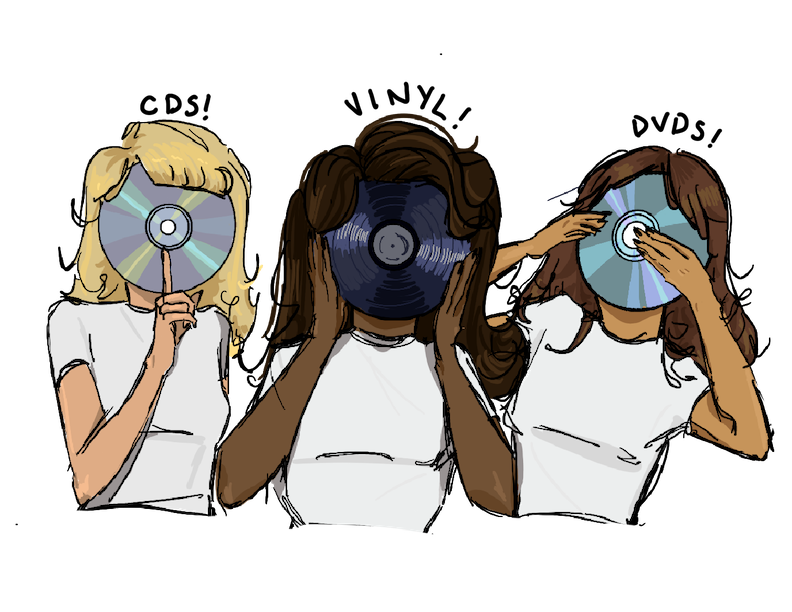
Art by Florence Fraser-Macduff
The digital era has fully consumed this generation and ushered in the desire for extreme convenience. Food delivery apps, online shopping and Artificial Intelligence (AI) overviews were all made with the intention of saving time and effort, but most of all, streaming platforms allow access to thousands of movies, TV shows and music on demand at any time. All this entertainment at our fingertips has created this illusion of security, that art can no longer be lost, as it lives forever in digital form. This infinite record of media that the internet has allowed us to generate appears to be clean, compact and convenient. But this doesn’t invalidate the importance of collecting and preserving art; if anything, it enhances the value of physical copies.
Physical media is something you can truly own; a material object that can be held, cherished, and loved. Purchasing a subscription to a streaming service provides the impression that the buyer owns all the media on the platform. It allows them to listen to or watch countless pieces of art over and over again, and enjoy every last second, until all of a sudden, the rental expires or a favorite song or movie is randomly removed from the app. On Nov. 11, 2022, the beloved Bladee album “Ice Dancer” was removed from Spotify due to issues with Distrokid, the music label it was distributed by. Fans were up in arms about the fact that they could no longer listen to their favorite songs like “Waster” and “Side by Side”. The situation reassured that streaming music is practically leasing with no guarantee. You never truly owned the art at all; instead, a corporate middleman was holding all of this media in its iron fist. Buying a CD or a DVD gives the art a permanence that was not there digitally; it helps preserve it for the ages, as well as acting as a bridge between generations. Rosalie Tsirlin (’26) shares her experience with the impermanence of modern media.
“Theres some records that I have that are pretty old, from the 40s and the 50s, and I try to find the songs online and I can't," Tsirilin details, “So the only way I can listen to it really is from my record player.”
Physical media is often passed down from parents to children, thereby introducing a new age group to artists who were popular when they were teenagers. Ownership of digital media is a complex, layered and nuanced business process which is often unclear to the consumer. Buying a movie on any streaming platform doesn’t ensure lifelong ownership the same way that owning a physical copy does.
Streaming has also led to new waves of mass censorship like never before. Cutting controversial scenes or removing entire episodes from a platform has become far more common these days. Although some restrictions like this are caused by national media laws and government regulations, streaming platforms are just as complicit in this issue. For example, in mid-October of 2024, viewers noted the removal of 19 Palestinian-made films from Netflix’s library. Though they blamed this on an expired three-year licensing deal, it calls into question why Netflix – the 300 billion dollar company – chose not to renew the license. Though it might not have been their intention, removing these films aligned them with a certain political stance, and no matter what their political views are, the media they stream should remain universal. Purchasing physical media helps negate this censorship; owning DVDs allows the viewer to enjoy art as the creator originally intended, and understand the initial message and meaning behind the piece instead of a manufactured and watered-down version. It creates the option to have a more authentic viewing experience, therefore removing the distance between the artist and the consumer. Samo student Fiona Schweig (’26) shares her perspective on listening to vinyl over streaming music.
“If I'm at home, and I put a record on, I put it on deliberately to listen to that album in the order that the artist put it in, and I think that makes you pay more attention to the message behind the music.”
Film and music are both forms of media that capture the complexity of humanness and human sentiment, so stories and memories can be tied to physical objects far more easily than they can to digital ones. Media like CDs, DVDs, records, Blu-rays, etc., are items that can and often do hold emotional value. Take the Criterion Closet, a series started by infamous DVD distributor The Criterion Collection. The YouTube show allows people to sit down and watch their favorite actors, directors and celebrities browse the endless discs that The Collection provides, and select and discuss their favorite movies of all time. The entire concept of the series and what makes it so popular revolves around the connection between human experience and art.
With streaming platforms paying out pennies in residuals and generative AI becoming an encroaching threat to artists around the globe, buying physical media has become more important than ever. Creative jobs within the film and music industries, like storyboarders and voice actors, are already being replaced by generative AI, and even popular songs and memes on social media are fully machine-generated content. Shweig highlights the importance of purchasing physical media during a trivial time for modern artists.
“Directly supporting an artist that you really enjoy by purchasing vinyl from them is a good way to show your support and actually help them progress.”
Though it might seem minuscule right now, this issue will only grow with the continued training and use of these AI platforms, and one of the few ways to combat this is to further our consumption of physical media. Purchasing these items directly profits the creatives behind your favorite media and supports them at a time when their livelihoods are at stake.
Ultimately, owning and collecting physical media is a way to preserve music and film in a more meaningful way. Shifting away from cold, corporate streaming services to DVDs and CDs allows for a more intimate relationship with art and enables one to objectively and outwardly showcase their interests.