
Charlie Kirk fatally shot at Utah Valley University during debate
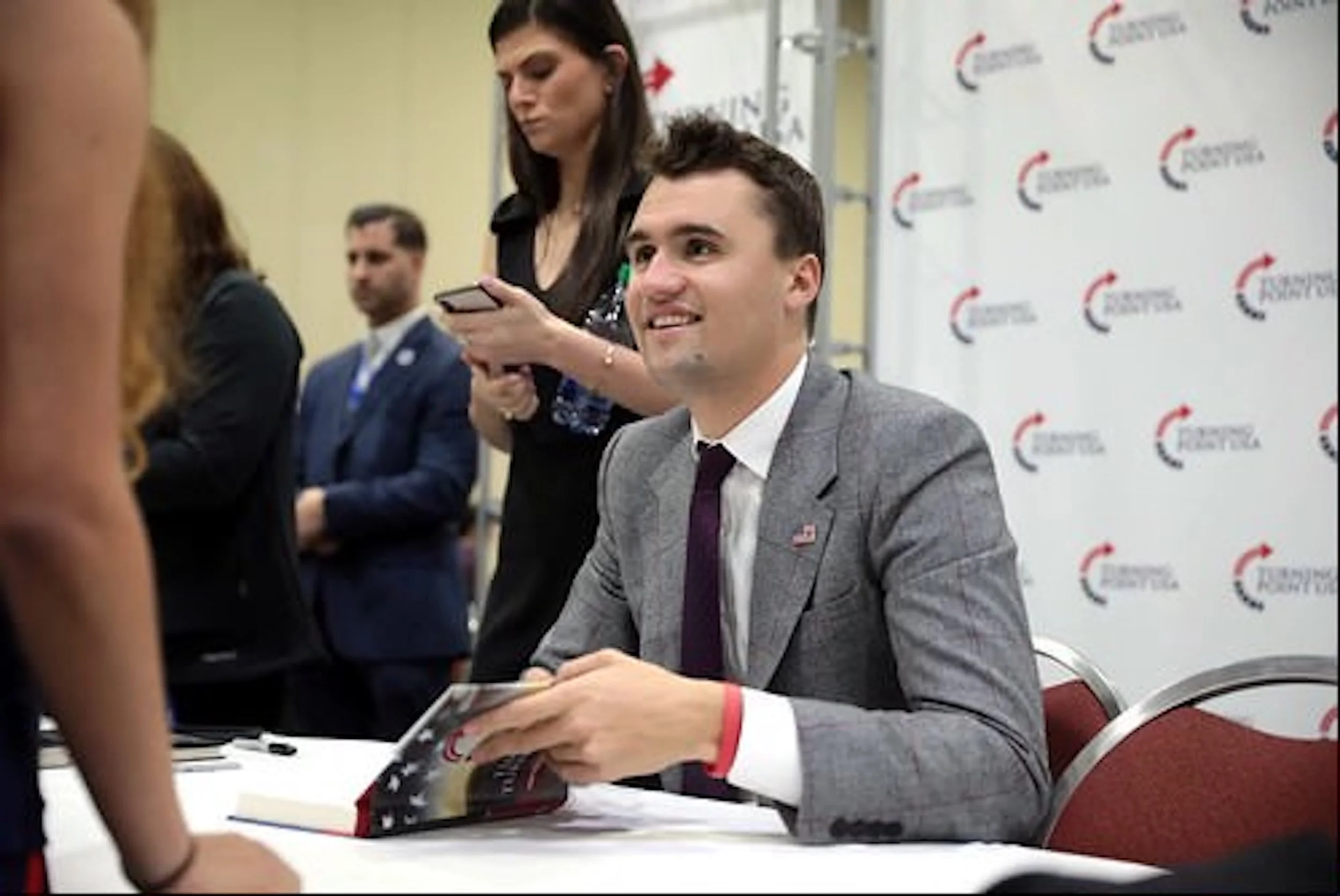
Gage Skidmore / Contributor
Charlie Kirk addressing attendees in West Palm Beach, Florida, at the 2018 Student Action Summit held at the Palm Beach County Convention Center by Turning Point USA.
On Wednesday, Sept. 10, at 12:23 p.m., Charlie Kirk was shot while debating college students at Utah Valley University. Kirk was pronounced dead by President Donald Trump at 2:40 p.m. on Truth Social.
During an outdoor event for his ‘American Comeback Tour’, Kirk was addressing a crowd of approximately 3,000 people. According to police, a single shot was fired from a rooftop overlooking the event, striking Kirk in the neck shortly after he began his remarks. Samo student Anton Suvak (’27) described what he witnessed in the video circulating shortly after the incident.
“Charlie Kirk picks up his mic, puts down the mic, says something, and [then] you just see him getting shot, and it's just gushing blood. He drops his mic, faints, and then you can see his security guards just jumping over and piling over him, I guess protecting him. Obviously, the crowd started running and screaming,” Suvak said.
Law enforcement officials initially struggled to identify the suspect, combing through tips and video footage in the days after the attack. Two days later, Tyler Robinson, age 22, turned himself in and was taken into custody. He now faces seven charges, including aggravated murder, with prosecutors announcing plans to seek the death penalty.
Court filings have shown that Robinson had texted his partner before the shooting, saying he “was tired of [Kirk’s] hatred.” Investigators pointed to the message as strong evidence that the attack was politically motivated.
Kirk, who was 31-years-old, first rose to prominence after founding Turning Point USA in 2012, at the age of 18. Turning Point is an organization that builds chapters on college campuses nationwide to promote limited government and free-market principles.
He was a frequent television guest and hosted a conservative podcast. Followers praised his efforts for giving young conservatives a stronger voice and opening up dialogue, while detractors accused him of spreading misinformation and division. Kirk was also an outspoken advocate for President Trump, serving on advisory committees and campaigning for election policies that drew controversy.
In the days following the shooting, responses continued to emerge from across the country. Allies organized vigils and commemoration services, with Kirk’s official funeral hosting over 200,000 people. Critics, while condemning the violence, highlighted the controversies that often surrounded him. Moira Donegan, a popular journalist with The Guardian, reflected on the death of Charlie Kirk while still questioning how political rhetoric contributes to rising tensions.
“Political differences are not the same thing as spewing hateful rhetoric on a daily basis,” Donegan said.
Reactions swiftly spread across the political spectrum. Supporters hailed Kirk as an advocate for conservative students, with President Trump issuing a statement on the matter.
“ He's a martyr for truth and freedom and there has never been anyone who was so respected by youth,” Trump said.
The president was quick to claim that it was the responsibility of the “radical left”.
“ Radical left political violence has hurt too many innocent people and taken too many lives. Tonight, I ask all Americans to commit themselves to the American values for which Charlie Kirk lived and died,” Trump said.
Tyler Robinson, the perpetrator, is registered as unaffiliated and both of his parents are registered Republicans.
The shooting has brought into focus the broader climate of political polarization in the United States. Public response has been mixed, with some citing concerns of free speech and others citing controversy surrounding Kirk's public statements. Samo student and Turning Point USA member Lucky Basseri ('26) offered comment on the importance of coming together, noting that blaming whole groups increases violence.
“To see an American murder another American, [and] to see Americans on both sides celebrate it or use it to attack the other side, it just doesn't sit right with me,” Basseri said. “I had my views as to why it was done, but that doesn't mean I [say] it's everyone on the other side's fault, because that's just how you lead to more deaths and assassinations and danger for all of us.”
As investigators build their case against Robinson, attention is also turning to the rise of political violence encompassing our nation. Yet for many, including prominent political figures like former President Obama, the broader question is how the killing will shape public debate on campuses, in politics and in everyday conversations.
“We are certainly at an inflection point… it is something that is anathema to what it means to be a democratic country,” Obama said.