
Mediocre media marketing: it’s boring please make it stop
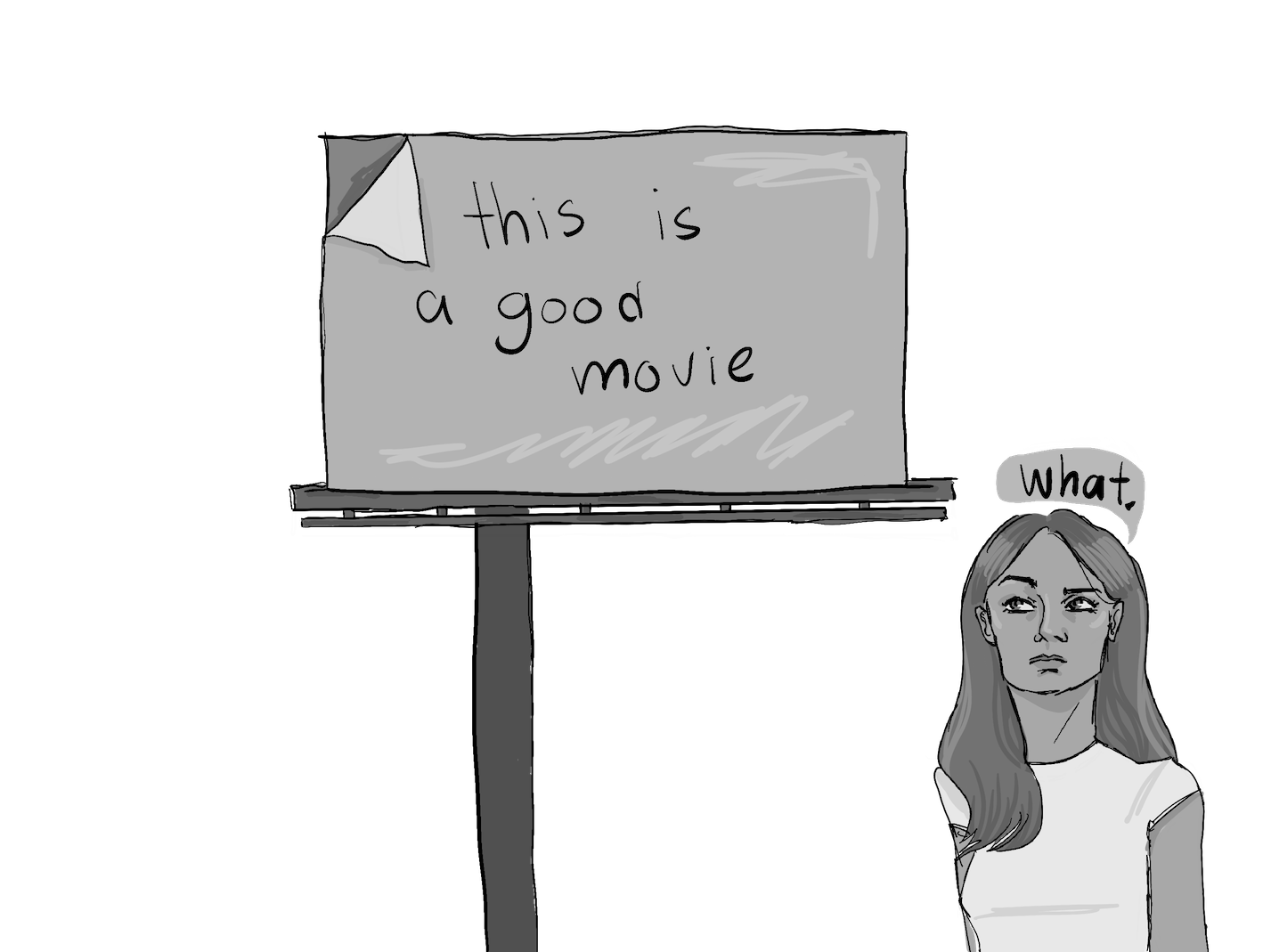
Art by Florence Fraiser-Macduff
Advertisement is the off-the-record make-or-break of any film. A movie can be serene and meticulously crafted beyond comprehension, but make absolutely nothing in box office if it's poorly advertised. Good marketing creates word of mouth and anticipation for all forms of cinema, television, movies and even music videos. Without it, the spotlight ceases to shine, leading potentially monumental films to be utterly disregarded. We are all taught at a young age not to judge a book by its cover. However, in the hyper-commercialized world we all live in, if a billboard is bad, it’s simple: just look elsewhere. Recently, it seems the marketing of up-and-coming blockbuster films with notable actors and beloved directors have been falling flat.
Beyond creating excitement, billboards are critical to the aesthetics of the neighborhood it inhabits. Due to the longevity of a billboard, an appealing design is, of course, preferred, so neighborhoods aren’t afflicted with unattractive commercials for six months to a year.
Music biopics have become increasingly more popular in recent years, with the release of films such as “Dylan” starring Timothee Chalamet and the highly anticipated four-part Beatles movies set to release in 2028. Yet, the marketing for the 2025 biopic of renowned American music icon Bruce Springsteen was shockingly stunted. Every aspect of the billboard lacked sufficient creativity, from the font choice, arrangement and what it was marketing. A big, hyper-suburban ‘IMAX’ eclipsed the various 14 by 48-foot signs dispersed throughout Los Angeles. At the bottom left-hand corner of the atrocious design, the timid, subtle, “Springteen: Deliver Me from Nowhere” resided, unnoticeably and allegedly purposefully..? Based on the context clues of the poster, like Jeremy Allen White posed bottom center and the blaring, obnoxious ‘IMAX’, it would seem as though the film was about his limerent love for larger, high-resolution screens. The billboard is so detached from any correlation to Springsteen that it draws closer to the Nicole Kidman AMC skit, presenting as a campaign poster for IMAX rather than a detailed depiction of a cherished American rock artist’s creative process.
A similar story can be relayed towards the advertising of Mark Ruffalo’s most recent project, “Task”. The short series could be one of the most notable television shows to come out in 2025. Its precarious plot and vivid declarations of composite emotions are just the tip of the iceberg of the seven-episode sequence. Following an FBI agent whose task force attempts to intervene with a conglomerate of gang-related murders, the show is technically within the action genre. However, the family-oriented content and intense displays of grief are the true foundation of the show. Through the phenomenal acting of nearly every cast member and the serene beauty of rural Philadelphia, this series leaves a necessary melancholy void in any observer in a manner that leaves them desperate for more. Yet, somehow, its marketing is the absolute antithesis of all the distinct themes the show conveys. The billboard plagues passersby’s eyes, reflecting the imagination of literally any action piece ever. Sure, the blurred background and out-of-breath cutout of a sprinting Ruffalo does encompass a singular element of the program: action. However, it entirely fails to encapsulate the reasoning and intricate emotional meaning behind the various chase scenes in the show. Upon first sight, it seems Ruffalo has reached the point in his career where he takes on pointless productions just to further line his already plentiful pockets. While it would be delightful to relay that cliché billboards are the only area in which movie and television marketing is lacking, that is woefully not the case.
The baseline issue with the various forms of underwhelming media advertising is rudimentary: there is just a decline of creativity within the industry. Graphic Design teacher and Yearbook advisor Shawn Saunders relays his thoughts on the lack of enticing advertisements in recent days.
“If a studio is not willing to take some chances with the film itself, they’re certainly not going to take any chances with promoting it,” Saunders stated.
There is a reason Graphic Design is considered an art class at Samo. Unique and interactive marketing is the baseline of what convinces people to purchase a ticket or turn on the TV. Without it, the already daunting web of unimaginative repeats threatens to take over the advertising world entirely. Saunders provides his perspective as to why graphic design in particular is so compelling.
“I think it’s artful to make something that resonates with people… [Designers are] trying to incorporate the messaging with the imagery and tying them together, because the cross-pollination of the hemispheres is what makes things stick right,” Saunders said. “If you engage multiple parts of your brain, you have a tendency to remember it longer, rather than depending on one specific part.”