
What happens to stolen art: in lieu of the louvre
Art by Florence Fraiser-Macduff
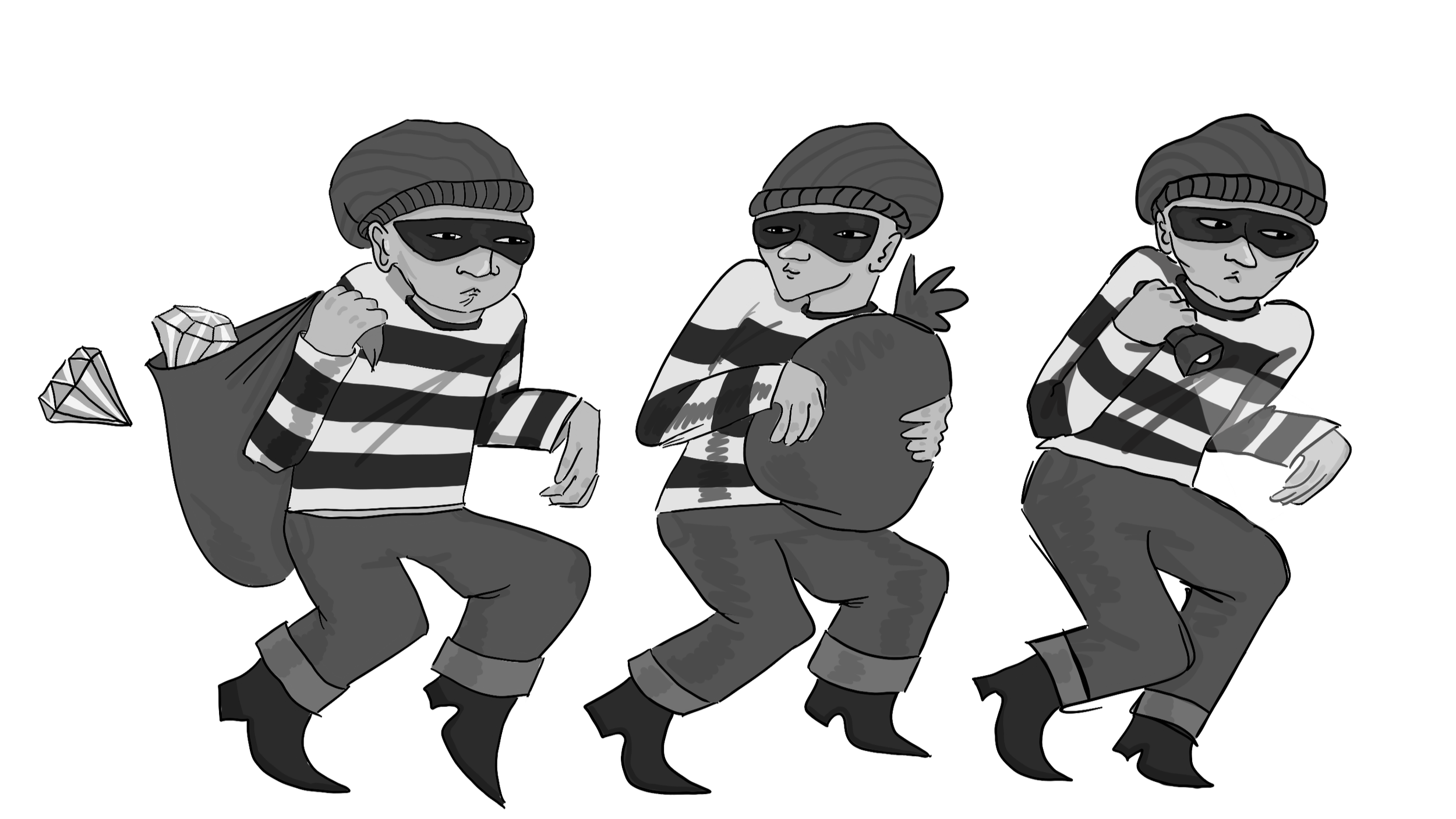
From the Ocean’s franchise to classic Pink Panther films to the real-life phenomenon, the concept of a museum heist has always been something that pulls the public's attention. The elaborate plans and suspenseful escapes are bound to draw in a crowd, whether or not the story is fiction or reality. In recent years, however, art heists had become far less common-until Oct. 19, 2025, when $102 million worth of historical jewelry was stolen from the Louvre Museum. Immediately, social media exploded, mocking the Louvre’s security, memeing the event and even coining the heist as ‘chic’. Among this uproar, almost nobody seemed to be concerned about the stolen items; millions of dollars worth of culturally significant jewelry was taken, quite literally pieces of history, but despite this, there appears to be no concern for the future of these jewels.
The politics of stolen art is something that extends far beyond the world of petty museum theft. Archaeological looting and the robbery of artifacts are things that are deeply rooted in colonization and exploitation; stealing culturally significant items not only creates an absence of the physical piece, but it also destroys cultural identity, creating a disconnect with the past while likely distorting history. Whoever the artifact was passed on to now controls the historical narrative, giving them the power to misconstrue or even erase the past. For example, on Oct. 15, 2025, over 1,000 historic Native American artifacts were stolen from an off-site storage facility belonging to the Oakland Museum of California (OMCA). The loss of these pieces is a loss for the community as a whole; it is robbing the public of connecting to California’s heritage and it is robbing the tribes that the items belong to of key pieces of their history and culture.
More times than not, the looted pieces are gone for good; stolen art has a recovery rate of under 10 percent, meaning thousands of lost artworks are scattered across the globe. There is a very narrow market for art that falls under this category and any sales are, of course, highly illegal. In regard to paintings, there tends to be little chance of retrieval if they are not reported to be stolen in the first place. This can occur when a painting is stolen from an archive as opposed to an open museum. With everything tucked away in protective boxes, it is unlikely to notice a piece is missing unless inventory is taken. In this case, paintings are usually sold to oblivious collectors or art fanatics who have no clue that the painting is stolen, sending it down a path of never seeing a museum wall again.
A list of stolen art is compiled in databases and can be used by museums, collectors and dealers to cross-reference the legality of future assets. Information from these digital archives can be used to assist in investigations surrounding illegal art trade, overall adding a layer of hope in recovering the lost artifacts. Since the Federal Bureau of Investigation’s (FBI) Art Theft Program’s inception in 2004, the agency has been able to recover over 20,000 lost items estimated to be worth over one billion USD. These online databases, undercover operations and international partnerships and investigations all aid the FBI in returning these art pieces to their rightful owners.
But jewelry, on the other hand, has a far more elaborate vending procedure. Valuable historical jewels, like the ones recently stolen from the Louvre, are recognisably assembled and cut, meaning they can not simply be sold to the highest bidder. Jewelry like this is broken apart, recut and melted down, which makes it unique from the original piece at the expense of decreasing the value. Dismantling them hides the fact that they are stolen, but also means they must now be sold at a fraction of the price since all of the historical significance - and therefore worth - has been stripped away.
The recent Louvre heist has sparked conversations concerning the effectiveness of museum security. It brought to light that one of the most prestigious museums in the world utilizes weak passwords and a subpar security system, highlighting their focus on splurging on new art pieces instead of protecting the ones they already have. Capitalistically, they are pouring their budget into installations and maintenance in hopes of attracting more visitors, therefore leaving priceless historical art open and vulnerable. It is worrying to think that if security threats like this persist, it might limit the amount of art that will be displayed for public consumption. After all, art is made to be looked at and adored, not hidden away in an archive. Samo student Olivia D'Annibale weighed in on the future of museums and public art viewings.
“A bunch of museums are already free, and that brings [art heists] into question,” D'Annibale said. “Everyone should be able to appreciate art, but if society doesn’t respect it the way it should be, then the question [of whether or not art should be publicly displayed] is up for grabs.”
Some might argue that the robbery of museum goods doesn’t matter due to the fact that some of these items have been stolen by the museum in the first place. Although that isn’t entirely wrong, it is important to acknowledge that these museums hold and display these art pieces for the public to enjoy. People can connect with these artifacts culturally as they allow insight into past customs and ways of life. Having the artifacts in traceable and recorded collections provides hope that they can one day be returned to their rightful owners, but stealing these goods for monetary gain removes this possibility entirely. With the likelihood of these stolen pieces being pawned off to private buyers, it is clear that most art heist outcomes avoid repatriation altogether and overall harm the public’s relationship with historical art.