
New ISPE requirements result in stricter criteria
This school year, the Independent Study Physical Education (ISPE) requirements for Samo have been modified, which has resulted in stricter criteria. ISPE is a program that offers rigorous student athletes the chance to acquire their PE credit outside of school practice, training and competitions.
This program is for students who aren’t already active in a school sport. While Samo offers a myriad of sports, ISPE is a need for students who participate in a sport outside of school that isn’t offered at Samo, like ice-skating. That way, these students can receive their full PE credit without having to do a general PE class on top of the practice they already have. This year, students are provided less flexibility within the new requirements.
For ISPE, a documentation of a specific number of hours of physical activity per week is required. The amount of hours of physical activity needed per week was originally a little bit over three hours, but has increased to seven and a half hours. The initial proposal was to increase the number of hours to 10, but after much debate, the Santa Monica-Malibu Unified School District (SMMUSD) decided 10 hours may be too big a shift for some students. Multiple SMMUSD board members think that the increase in hours is a positive addition to the criteria, like Dr. Ashley Benjamin, SMMUSD’s Director of Curriculum and Instruction.
"ISPE is for the student who is competing and training like their peer counterpart who is on a competitive team on campus," Benjamin said. "A novice trying out a program is not equivalent to a high school competitive athlete, where athletes are training up to 13 hours per week plus games."
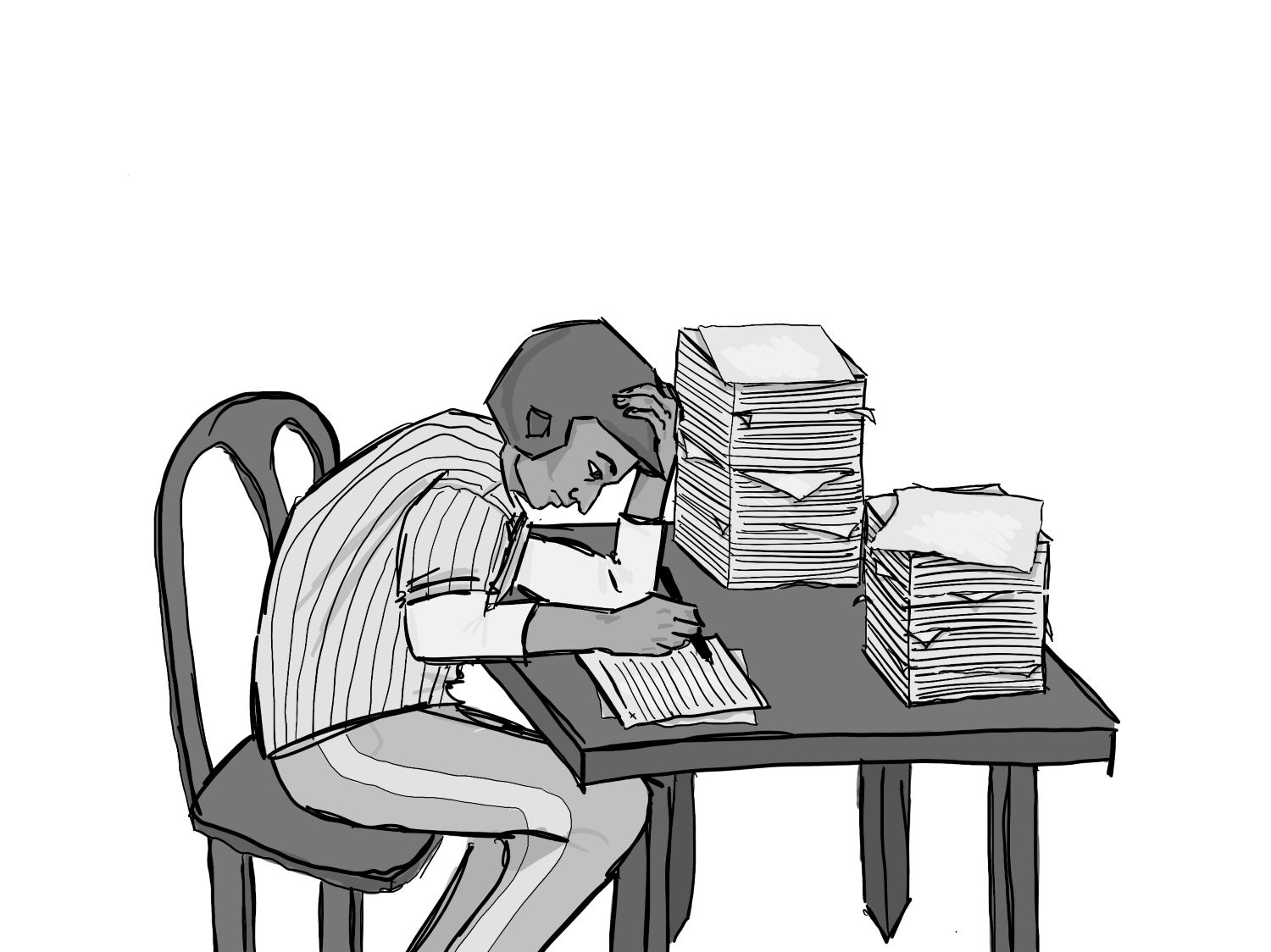
Art by Florence Fraiser-Macduff
Various students have expressed their feelings about the increase in required hours. Annelise Sebastian (’28), a member of ISPE who practices taekwondo, shared her perspective on why she believes the increase in hours is an unjust decision.
“Honestly, I feel it’s a little unfair. Even though people taking sports at Samo may exceed that amount of hours, people in the whole PE group are only doing around four and a half hours of PE per week,” Sebastian said. “I feel like me personally, I took ISPE as a replacement for PE, so I could fill my class for another academic, or fill my schedule with another academic class. Therefore, I would have a lot more work than the average student taking PE.”
Xylia Criswell (’26), a student-athlete at Samo on the varsity girls’ water polo team, shared a different perspective on how the new change might be fair compared to students in PE and student-athletes.
“I do think it’s a just decision, it’s interesting because from the PE perspective, if you were in regular PE, you would be doing more than three hours a week of that,” Criswell said. “From the water polo perspective, when we’re in season, we have up to 14 hours a week of training. That’s almost double seven and a half, which makes seven and a half seem even more just.”
Eligibility for being accepted to the program has become tighter. ISPE is now solely for extremely competitive sports, whereas recreational sports, such as badminton or hiking, aren’t included in the ISPE criteria anymore.
Additionally, students applying to ISPE need to be highly ranked in their sports program. The type of programs that meet the ISPE criteria include preparation programs for State, National, Regional, or Olympic level competitions. Moreover, Micah Zund (’28), an active rock climber who participates in ISPE, raised a point on his belief that the requirement for sports with competitions isn’t ethical.
“It’s a little bit much, especially for some sports. They don’t have as many competitions, and their competition season is short. Like, if people are doing martial arts, there aren’t too many competitions. Rock climbing season is only for a couple of months,” Zund said.
While some students view the new regulations as unfair, the ISPE program stresses that the point of ISPE is to further advance elite student athletes toward their futures and that these modifications are ultimately for the benefit of students.