
The death of perspective
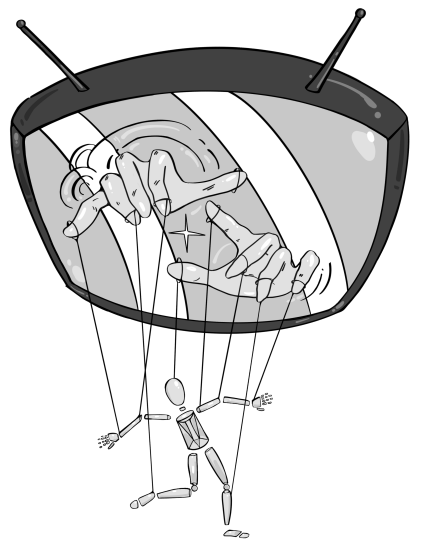
Art by Sara Polster
One of the most remarkable aspects of media is that people have the ability to interpret it in any way they deem appropriate. This is media literacy, a term defined by the ability to critically analyze stories presented in media and determine their credibility and accuracy.
For some forms of art, the effects of one’s interpretation can cause real-world events that stretch far beyond the piece itself. Looking at classic literature, books like “To Kill a Mockingbird” have influenced many subsequent generations to challenge injustices in society. One author who has taken inspiration from Harper Lee’s writing is lawyer Bryan Stevenson, whose own book, “Just Mercy” was summer reading for many Samo Juniors this past year. Stevenson writes about how the journey of Mockingbird’s main character, Atticus Finch, inspired him to pursue a career in law to help the wrongly accused. Despite the novel’s importance to him, Stevenson uses media literacy to acknowledge how the book romanticised aspects of racial justice and perpetuated a false sense of progress in how it was understood. It is important to see how he was able to question a work that he himself noted as inspiration and create a larger conversation around its overall effects.
Despite the positive influences of this novel, districts throughout America have banned “To Kill a Mockingbird” for its discussions of racism, making it one of the most frequently banned books in the country. Many other novels that challenge societal norms are met with a similar fate of banning. The discussion of women’s rights was silenced in the banning of “The Handmaid’s Tale” and, ironically, “Fahrenheit 451”’s own criticisms of censorship led it to meet a similar fate. Despite the important discussions these books have brought about, local government response in many areas focused on stifling these voices instead of focusing on why they are considered controversial. Hushing controversy instead of raising intellectual discussions drives society away from necessary critical thinking and in turn reduces media literacy. For instance, access to novels like “To Kill a Mockingbird” set Stevenson on his path of legal studies, yet his deeper media literacy is what helped him see the more complex issues at play and moved him to the field of social justice.
In addition to direct government censorship, the current state of media literacy is being reduced through representation of a singular perspective. The issue of banning classic literature in an attempt to portray one narrative is mirrored in the modern day through social media which limits perspectives and is based on the spread of biased information.
The design of social media has led to an algorithmic type of censorship, one that goes unnoticed because of its subtlety. While social media in moderation may not be directly harmful, its role in replacing genuine news sources is shaping the world view of its users dangerously. As a result of each person’s individualized feeds on apps like Instagram and TikTok, the distribution of content is not meant to show each person an unbiased view of the world, such is the job of a news source with integrity. Instead, these algorithms give users a personalized page of media which the users have no direct control over. With the goal of the algorithm being to keep its user engaged as long as possible, these ‘For You’ pages are made to show their audience agreeable media, effectively censoring them from seeing other perspectives. Researcher Nora McDonald writes about this phenomenon for ‘The Conversation’, a publication based on the protection of knowledge.
“Curated content is not just ‘for you’ but also ‘about you’–a mirror reflecting important signals about the person you are,” McDonald writes. “Teens we spoke with say they prefer a social media completely customized for them, depicting what they agree with, what they want to see and, thus, who they are.”
Actively denying its audience an opportunity to see opposing perspectives makes social media an echo chamber of one's preexisting notions. Rather than providing new perspectives, these algorithms reflect what a user already believes for its own benefit. Based on McDonald’s own observations on what teens prefer, this sentiment seems to be something that users agree with in regards to their content feeds. Circling back to the topic of media literacy, social media poses a large threat to how people intake media. Mixing so many uncredited and biased sources into people’s main intake of news makes determining validity of information near impossible. Without the ability to understand how credible or accurate this information is, media literacy is being actively attacked by social media on a daily basis.
Over time, this epidemic in media illiteracy will continue to spiral and devalue true journalism. Public opinion will be drawn to biased media over impactful and accurate news, lacking any insightful division that fosters growth. Opposing viewpoints will continue to echo their own ideals while attacking the opinions of others, diminishing the ability to have a civilized debate. Online verbal attacks will push surface level controversies forward and make it harder to create effective commentary. This is the world we will live in with the death of perspective, a world that gets closer every day as a result of censorship and social media replacing journalism.