
Beach within 100 feet of Santa Monica Pier hits unhealthy levels
Leo Mooney / The Samohi
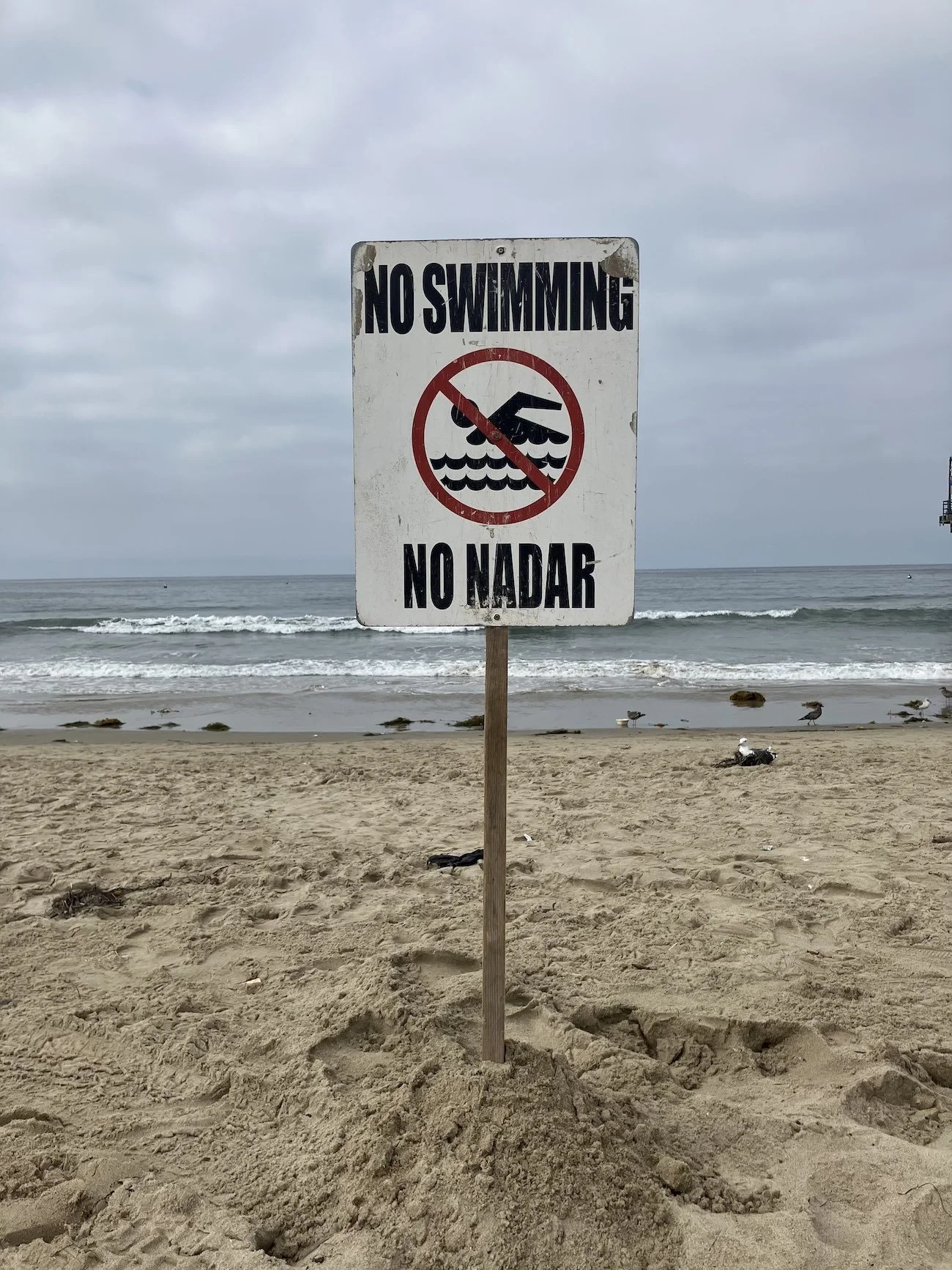
This sign, located on the south side of the Santa Monica Pier, informs people not to swim within 100 feet of the pier due to elevated bacteria levels.
In a study conducted by Heal The Bay on May 22, the beach within 100 feet of the Santa Monica Pier was ranked the second most polluted beach on the west coast and an F on their grading scale. As of Oct. 22, that section of the beach remains an F. Urban runoff, bird feces and high bacteria levels are all major causes for this problem.
One major issue is urban runoff from the many drain and sewage systems that lead straight to the beach. According to the LA County Department of Public Health, an ocean water quality rain advisory is declared when there is significant rainfall that causes run-off from inland to flow to the ocean. Run-off can cause increased bacterial levels in ocean water, especially near storm drains, creeks and other waterways. Contact with contaminated water can cause illnesses. One major drain that empties right into the Santa Monica Bay is the Pico Storm Drain at Pico and Ocean. It carries trash, chemicals and animal and human fecal matter. When these are present in high quantities, they increase the levels of bacteria. Meredith McCarthy, an expert on this matter and the senior Director of Outreach at Heal the Bay explains how they test water levels through bacteria testing.
“To protect public health which is impacted by pathogens, we test for 3 kinds of bacteria,” McCarthy said. “And we know that if those bacteria are present then chances are those pathogens are present. If there are huge amounts of bacteria then the water is not very safe for humans.”
According to a report by the city of Santa Monica, another driver of poor water quality is the presence of bird feces. It contains harmful bacteria, including Escherichia coli and Enterococci, which in high quantities lead to many dangerous and long lasting illnesses including gastronomical, respiratory and skin infections. According to Surf Santa Monica, the area surrounding the Santa Monica Pier holds a hub for birds due to the access to food and landing and roosting areas. Therefore the water within 100 yards on either side of the pier has received an ‘F’ grade on a scale where lower grades are linked to higher risks of illness.
Immediately after the Palisades fires in early January, effects were known to be catastrophic to the ocean ecosystem. One metric for measuring pollution is the concentration of heavy metals in the water. According to the Los Angeles Times, the fires caused metals concentrations to rise to two to four times higher than normal, posing a threat to marine life and beachgoers. Beaches were closed by health officials from late January to early February. However, these warnings slowly faded and LA County health officials gave the ‘all clear’ that the beaches were okay for use on Wednesday April 9.
Although the effects have been unclear, many locals have noticed changes in the environment and level of pollution. Physical trash is an issue which can make many people feel that the water isn’t clean, but the major driver of poor water quality is in factors that are not visible. Damien Hashim (’27), a local surfer and avid beachgoer has noticed a change in the Santa Monica beaches as of late.
“The beach definitely feels dirtier. When I surf I see a lot of trash floating around in the water and on the sand,” Hashim said.
Initiatives are being taken to combat the effects of beach pollution and individuals can contribute. Many organizations have mobilized volunteer trash pickup events and have tried to limit plastic use.
“If people are going to the beach and they see trash, picking that up and tossing it away could be very helpful. Imagine if everyone did that, the beaches would be clean. The little things can make a big difference,” Hashim said.
Although people can make an impact with cleaning up beaches and trash, the real changemaker is the city and their contribution.
The city of Santa Monica has recently approved an ordinance that limits the distribution of food to animals near the pier. Additionally, the city has installed bird deterrent netting and is implementing laws to help the issue. Furthermore, the city has an ordinance designed to reduce the amount of urban runoff pollution that reaches the storm drains and feeds into the Santa Monica Bay.
“We need folks to focus on the climate crisis and that means they have to engage with their elected officials,” McCarthy said.