
Unrest over Netflix’s buyout of Warner Bros.
As of Dec. 25, 2025, Netflix announced its big merger deal to buy out Warner Bros. Discovery and HBO Max for more than $72 billion. Expected to be put into action by the summer of 2026, the decision has had varying reactions. Some claim the merger contains certain benefits, such as a larger library of films/TV, but it has also faced extreme backlash from the film industry and movie lovers all over the world for numerous reasons concerning the downfall of Hollywood.
The merger deal is expected to jeopardize the theater industry significantly. Netflix has released very few of their original movies in theaters and when they have, the purpose was to be eligible for academy awards. Such was the reason for releasing “Train Dreams” and “Frankenstein” in theaters. The theater industry has already started to become a memory of the past with increasing prices and the availability of home streaming services. Netflix buying Warner-Bros, a classic film company known for their theater releases, could be the final nail in the coffin of good movies in theaters. In 2019, when Disney bought Twentieth Century Fox’s vast film library, they banned showings of Fox’s classics in repertory cinemas, including “Die Hard”, “The Sound of Music” and “Home Alone”. The film industry fears the Netflix merger may result in a very similar outcome, with Netflix no longer showing Warner Bros. wide range of cinema in theaters.
However, Netflix claims that their intent is not at all to stop screening movies in theaters and that they plan to adapt to Warner Bros. style of movie theater releases. The exception to this is that Netflix plans to significantly shorten the window of time a movie is in theaters based on consumer wants.
Netflix CEO, Ted Sarandos, states Netflix’s plan.
“I wouldn’t look at this as a change in approach for Netflix movies or for Warner movies… I think, over time, the windows will evolve to be much more consumer-friendly, to be able to meet the audience where they are quicker,” Sarandos said.
Mark Schneeman (’26), passionate film student, explained his differing feelings on the merger deal and expressed his concerns of the newfound lack of competition amongst streaming services that would be a result of the deal.
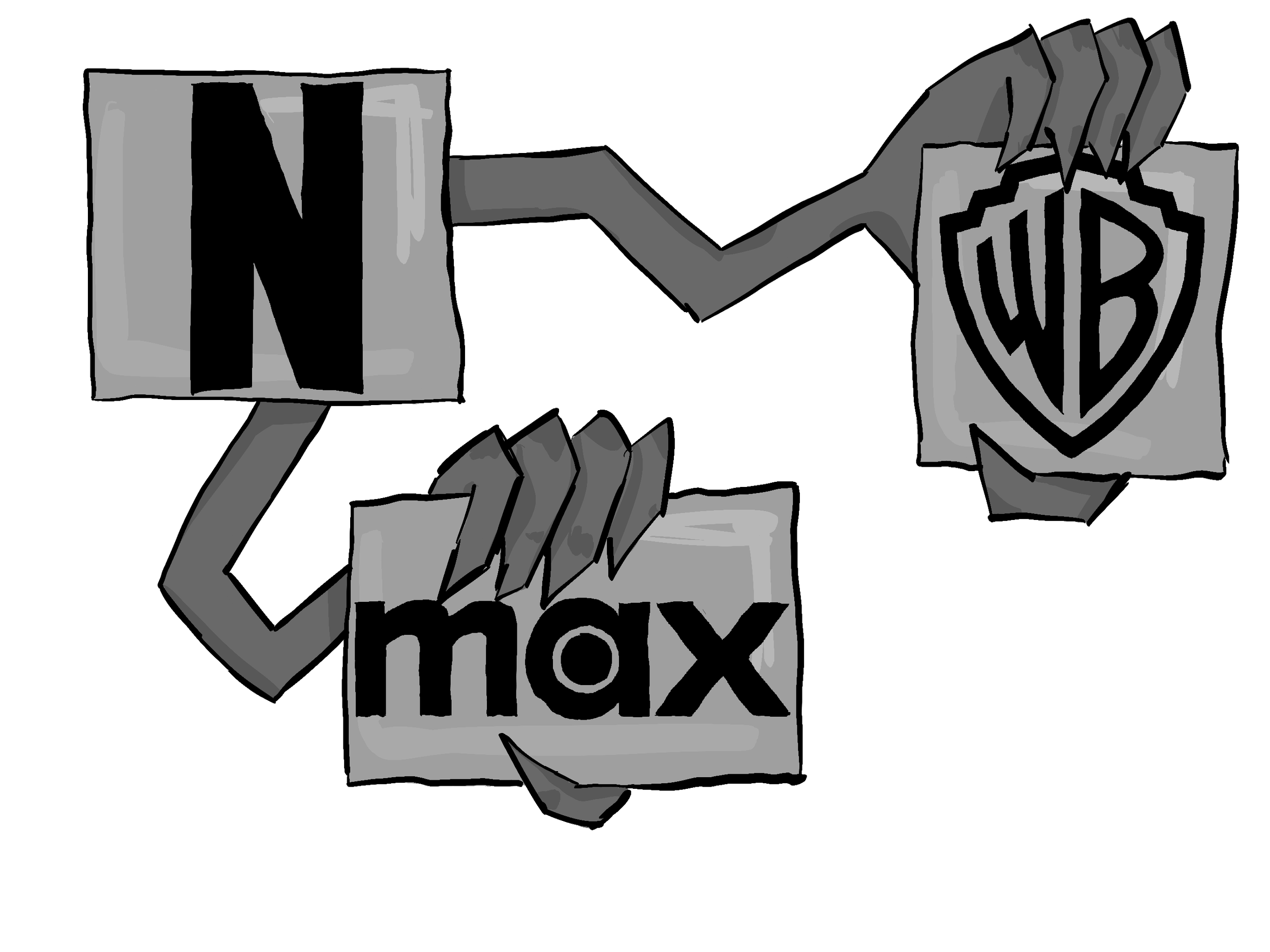
Art by Florence Fraser-Macduff
“I disagree with the merging of Netflix and Warner Bros. because it really seems like monopolies are starting to form in the media industry, with Disney’s many acquisitions and now Netflix. Without competition, it’s easy to bring up prices for consumers and reduce wages for workers, and it can also lead to a lack of originality,” Schneeman said. “Streaming services like Netflix and HBO have their own uniquely different styles, just like the many other streaming services. Everything merging could easily create a more homogenous selection of new movies, hurting the artistry of filmmaking. Overall, competition is good for consumers, workers and for originality and this acquisition largely threatens that.”
Netflix is not only buying the company, but are buying a 50 percent share in Warner Bros. side business, Studio Distribution Services (SDS). SDS is responsible for providing the public with all Universal and Warner Bros. movies on discs and blue-rays. The foundation of Netflix’s company was originally built on straying away from the DVD business into streaming services, becoming popular through overpowering Blockbuster. However, despite Netflix's efforts, DVDs are still essential to many, especially cinephiles and provide numerous benefits in today's day and age of streaming services. DVDs offer better quality visuals with less compressed films, are always reliable with streaming services constant adding and removing of cinema and overall just gives greater access to viewers.
This merger deal also involves Netflix taking over the responsibility of the preservation of old, classic films in Warner Bros. film library. The restoration and preservation of films is a grueling, expensive process, but one that Warner Bros. has been responsible for in the last century. Trusting Netflix with these films is doubtful. According to Jacobin.com, Netflix’s digitization used to preserve films is actually more likely to degrade over time than physical films due to certain environmental conditions. Netflix is historically not interested with the upkeep of producing DVDs and revitalizing old films, furthering the film industry’s overall concern of a dying age of physical media.
Netflix claims that this has been their mission, their overall goal to globalize and connect people through stories.
“Over the years we [Netflix] have been known to be builders, not buyers,” Sarandos said. “But this is a rare opportunity, and it’s going to help us achieve our mission to entertain the world and to bring people together through great stories.”
Netflix isn’t just buying a company, they're obtaining a job of upholding a legacy of art that has inspired many. While Netflix claims to have genuine intentions, this hasn’t stopped unease from rising within the film industry. This merger isn’t just going to lead to increased streaming culture, it will possibly lead to the end of an era– an era of classic cinema on the big screen, criterion collections and the soul of Hollywood.