
The White House’s War on Free Art
President Donald J. Trump has openly expressed his disdain for any historical artworks that don’t appeal to his own biased and offensive ideals. Trump’s recent actions involving removing funding from museums like the Smithsonian Institution show his plan to move the country towards a dictatorship where the media is controlled through censorship and political management of the arts.
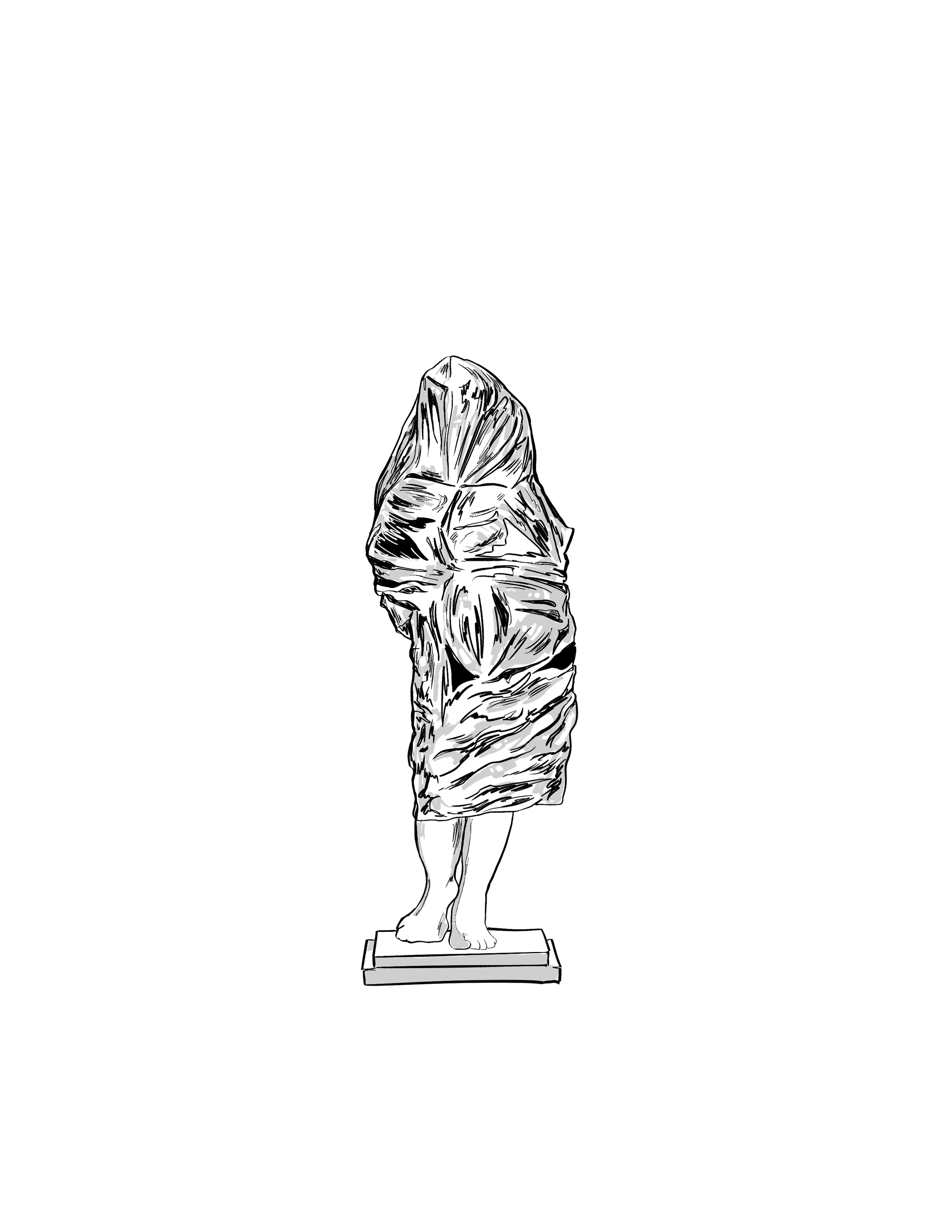
Art by Sara Polster
Trump made his intention of limiting freedom within the arts clear in his first term back in 2017, when he called for the termination of the National Endowment for the Arts (NEA) organization. This organization has been functional since 1965 and has given $5.5 billion in grants to multiple arts organizations and museums since its inception. I's an independent federal organization that is the single largest funder of the arts and education. By trying to terminate the NEA, Trump indirectly and purposefully will shut down many museums that represent minorities’ art and museums focused on artistic political commentary.
AP Art student, Kiera Jenkins (’26), shared her opinion on the topic.
“I think that the arts are very connected to freedom of speech, so I really don’t think it should be controlled,” Jenkins said. “If it’s not targeting a certain group, it shouldn’t be monitored.”
Historically, the beginning of a repressive system has been marked by leaders who attempt to manipulate visual or performative arts. This is done to alter the public’s thinking in ways that align with specific political belief systems. For example, China’s Cultural Revolution, as recently as 1966-1976, showed how effective censorship is when trying to control a population. Mao Zedong, China’s communist leader, attacked certain pieces of art and literature because they didn’t fall under his standards. His censorship even applied to specific people, as Zedong imprisoned artists such as Mu Xin who made opposing works. Xin made works that recalled the past–something strictly against Zedong’s regime. An example is “Reciting a Tang Poem on the Road to Shu,” which referenced the near-death of the Tang Dynasty. As a response, he was treated as a threat to society and put in jail. This extreme example of censorship shows how the criminalization of artists is a dictatorial tactic that the public must be aware of.
Alana Rivera (’13), Samo’s English, Freshman Seminar and AP Government teacher, commented on how control of the arts contributes to a tyrannical political system.
“[Controlling the arts] can be dangerous because if we’re allowing one person’s bias to decide what is allowed to be in museums, that is never a good idea,” Rivera said. “People have different interpretations of times, periods, even the same moment, so allowing people the space to interpret how they feel about art is important.”
Museums are supposed to be collective spaces of art and literature that mark moments or emotions throughout history. Art, in the context of history, is one of the clearest and most timeless portrayals of how individual demographics felt about any given situation. The censorship of media both removes select perspectives from history and gives viewers fewer opportunities to think for themselves. The administration’s goal in defunding museums is to force museum-goers to adopt a skewed perspective on the “rightness” and “wrongness” of groups in history.
The White House’s official website includes Trump’s executive order that states his quarrel with many modern museums. He implies that modern museums are forcing guilt and false blame on early American settlers and citizens, therefore making modern Americans feel resentful or negative towards their country's history.
“Museums in our Nation’s capital should be places where individuals go to learn — not [places] to be subjected to ideological indoctrination or divisive narratives that distort our shared history.”
Trump accuses multiple museums, specifically calling out the Smithsonian of showcasing an unusual type of alleged “revisionist history”.This is a term usually used to describe acts of whitewashing or sugarcoating history, often because of extreme patriotism. In this case, Trump claims that these museums make America look “inherently racist, sexist, oppressive, or otherwise irredeemably flawed,” according to his executive order.
Citizens in favor of Trump–generally the Make America Great Again (MAGA) division of the Republican Party–are often in support or unaware of these actions. It’s important to note that museums and arts aren’t just being defunded if they support an Indigenous, Immigrant, African American, or Asian perspective of the country. These actions defund factually correct depictions of American history that have been discussed for decades–or even centuries–not just for the past couple of years. The Jackie Robinson memorial has been up since 1997, and was removed from the Department of Defense’s (DOD) website last March on the basis of clearing out Diversity, Equity and Inclusion (DEI) from politics. This memorial simply highlights an important Black baseball player–completely unrelated to any arguments the Trump administration makes regarding defunding certain arts. The page that was up about Robinson mentioned his service in the army and his participation in the Black Panthers during the Civil Rights movement. The Black Panthers were a Black Alliance association that fought against Jim Crow/segregation laws and injustice. By removing this memorial, Trump is actively denying that the Civil Rights movement was important, denying that Robinson was an admirable soldier and denying that he was a revolutionary baseball player.
While American history is not always pretty, it is highly important to recognize the country’s faults to grow–growing is true patriotism. Trump would rather sugarcoat the past and brainwash American citizens into believing the country is currently perfect and the nation’s history is perfect. “Perfection” in his eyes is creating institutionalized disadvantage–removing the rights of people against him, making it harder for minorities to obtain jobs and taking away their voices. Defunding museums like the Smithsonian silences the voices of so many speakers and erases them from history. While the Trump administration rolls out more and more horrifying acts, every citizen must fight these continued injustices with individual power.