
SMMUSD Explores the use of AI in classrooms
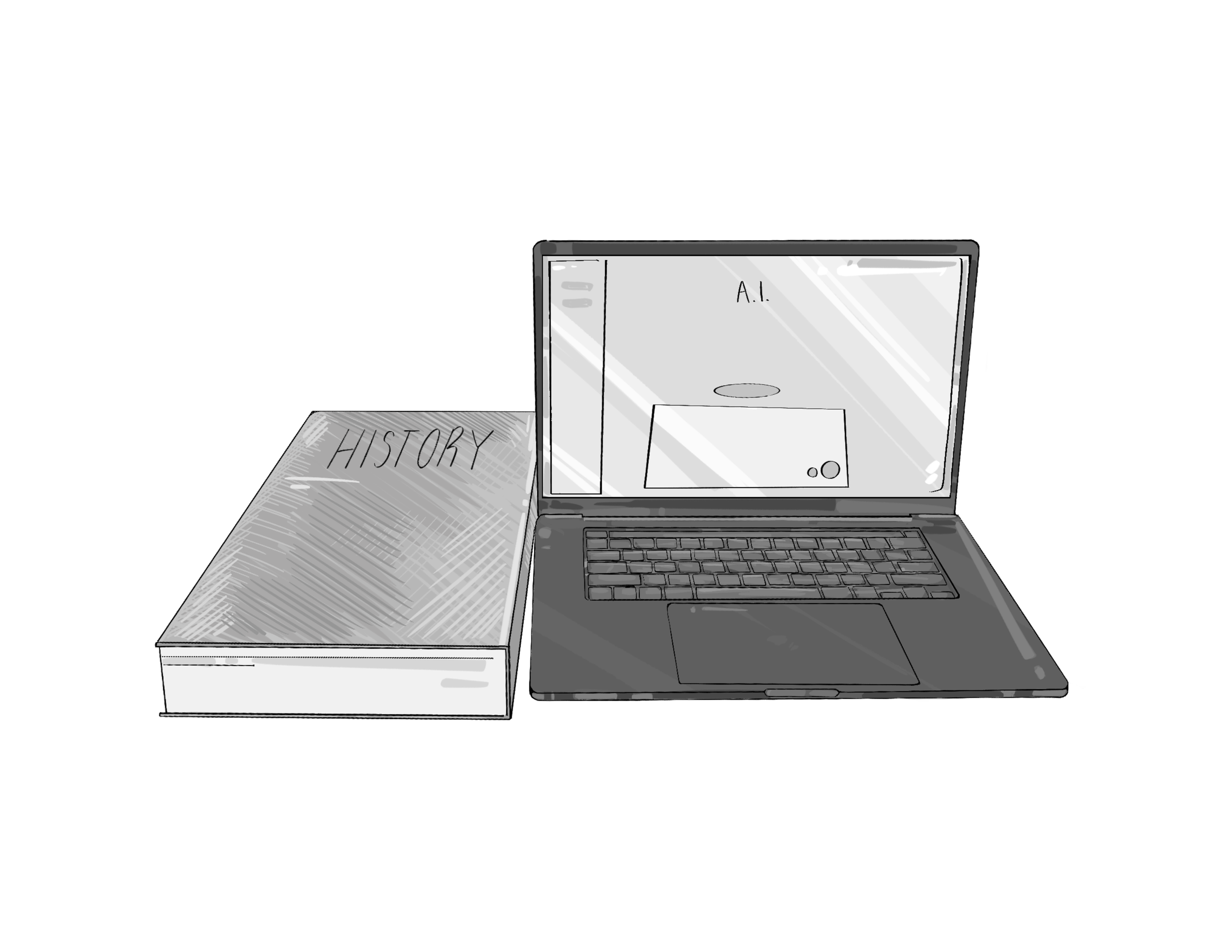
Since fall of 2024, Santa Monica-Malibu Unified School District (SMMUSD) has sought to gradually implement Generative Artificial Intelligence (AI) into the classroom in order to leverage its efficiency in a responsible way.
Art by Sara Polster
According to the SMMUSD website’s section on AI, SMMUSD initially established a Generative AI Taskforce, dedicated to researching the ways that AI can be used in the district’s education system. The Taskforce focused on ethical considerations, policy development, training for staff and students and recommendation of pilot projects.
In the summer of 2025, the SMMUSD Human Resources (HR) department released an updated Staff Technology Policy, accommodating for the broader adoption of AI. Policy 4040 for Employee Use of Technology allows employees to use AI apps to support their instruction, including, but not limited to “developing syllabi, creating curriculum, reviewing student work, suggesting instructional strategies, and researching academic content or instructional techniques.” In addition, the Student Acceptable Use of Technology Policy is currently being updated by SMMUSD’s Education Technology Services (EdTech), with the intent of addressing the various challenges and opportunities that come with AI.
During an AI pilot in the spring 2025 semester, EdTech hosted 75 teachers to assess three different AI platforms: School AI, Gemini and Brisk. Feedback from the sessions reflected a preference for Gemini, a Core Google Service that simplifies access and security, and Brisk, a personalized learning chatbot.
On Jan. 6, teachers at Samo had a similar one-hour training session led by EdTech. Teachers were asked to use Gemini’s image generation with unique prompts. Additionally, teachers formed small groups to discuss how AI could be used without encouraging students to plagiarize their work.
Consequently, the meeting led to skepticism and resistance from some attendees. AP U.S. History teacher Margaret Colburn is one teacher who questioned the integrity of using AI for education.
“During the meeting they introduced a few AI resources for planning on grading. I think it’s morally reprehensible that the district is pushing AI,” Colburn said. “The use of generative AI is mixed among teachers. I have heard of some who use it to plan…I do know some teachers have used it to write letters of recommendation, which is highly frowned upon by colleges, and I feel it’s disrespectful to the student.”
Colburn additionally expanded on the limited benefits of AI and how she thinks it will affect her profession.
“Some see it as helpful to them, but most I talk to see students’ use as a hindrance to their development. The only thing I find helpful about generative AI is the addition of captions on videos to help students who need them. Other than providing support like captions to close that equity gap, generative AI is only a hindrance to my profession,” Colburn said.
The effects of AI have also extended towards students and have received mixed reactions. Samo student Daniela Tolmazin (’27) described her stance against AI, arguing that it devalues the work of both students and teachers.
“I’ve had friends with teachers who’ve graded their work with AI and it makes mistakes. If I wrote an essay and the teacher didn’t even read it and just pasted it into AI, I’d be very upset,” Tolmazin said.
Students have reported that AI has been incorporated into some AP US History classwork assignments this semester. They were instructed to paste their writing into ChatGPT in order to revise their rating based on its feedback.
However, Samo students also recognize the crucial assistance that AI can provide teachers. Those with open-minded perspectives, like Lena Zymanczyk (’27), believe that proper guidelines will ensure its effectiveness.
“I do trust SMMUSD to make the right AI policies. I definitely agree with allowing teachers to make a lesson plan or maybe help them with grading, but I think it would be beneficial to draw the line at teachers making AI-generated assignments. This should not be allowed, especially if it is not clarified that it’s AI,” Zymanczyk said. “If I were a teacher, I would use AI in moderation, like making a lesson plan for the week and help me grade assignments for consistency. I like that AI can help remove our biases.”