
Artemis II Revives Moon Exploration
The first astronauts to travel to the moon in 50 years have made it back to Earth safely on April 10, marking a huge milestone in humanity’s return to space.
After Apollo 17 in Dec. 1972, the National Aeronautics and Space Administration (NASA) ended manned lunar missions primarily due to budget constraints, lack of public interest and the end of the Cold War. The end of the space race also shifted focus from lunar missions to other developments, allowing NASA to spend money in other areas such as the space shuttle.
However, in late 2024, NASA decided to move forward with the Artemis program, aiming not to send humans to the moon, but to establish a long-term presence in space and prepare for future missions.
Distinct from the Apollo missions in its focus on short visits to the moon and its aim for creating a sustainable human footprint, the Artemis test drive mission helped pave the path for further exploration of our moon and solar system. Down the line, the plan is to construct a permanent base on the Moons’ surface, where the prolonged goal is to have astronauts live and work near the lunar South Pole.
Physics teacher Jessica Gutierrez believes the project would be beneficial to exploring space further.
“As a science teacher and science lover, I think it would be worthwhile to explore and to learn more about our own planet, what's in our solar system and universe,” Gutierrez said.
On their 10-day journey, the crew tested Orion’s spacecraft's life-support systems, which is the capsule that the astronauts traveled in. They also verified the Space Launch System (SLS) for crewed flight and gathered needed data for future lunar missions to the moon and further.
Aerospace engineering student Grant Jensen (’28) explains his thoughts on the effective mission.
“I think honestly the biggest achievement of the trip was demonstrating that the Artemis rocket was capable of reaching the moon and proving that everything worked properly and efficiently," said Jensen.
Notably, Artemis II took humans farther into space than any crewed mission since the Apollo 17 mission half a century ago. The Orion capsule journeyed thousands of miles and beyond the far side of the moon. This allowed the crew to see the “dark side of the moon” for the first time, through the window of the capsule.
After circling the moon, Orion made its journey back home, successfully splashing down in the Pacific Ocean off the coast of San Diego, California on Apr. 10. The accomplishment of the mission also introduced a generation of astronauts who are helping shape the future of space travel.
Artemis II’s four crew members - Reid Wiseman, Victor Glover, Christina Koch and Jermey Hansen- were selected considering the experience, diversity and leadership they bring to the mission. Wiseman, the commander and one in charge, is a former navy pilot and experienced astronaut who has previously spent time on the International Space Station. Glover, the pilot, also a navy aviator, is the first Black astronaut to live on the ISS and travel to the moon with the Artemis crew. Koch, a mission specialist, holds the record for the longest single spaceflight by a woman, as well as the first woman to go around the moon. Hansen, a Canadian national, is the first non-American to travel to the moon.
Andie Ernst (’28), who watched the takeoff and splashdown in her home, comments on the variety of the Artemis crew.
“It’s such a cultural moment that we're going back to the moon and I think it's so cool to see diversity especially because it’s inspiring many students who are girls or people of color,” Ernst said.
With the crew safely on Earth, NASA and its partners now will turn attention to preparing for next year’s Artemis III mission, when a new Orion crew will test integrated operations with commercially built Moon landers in low Earth orbit.
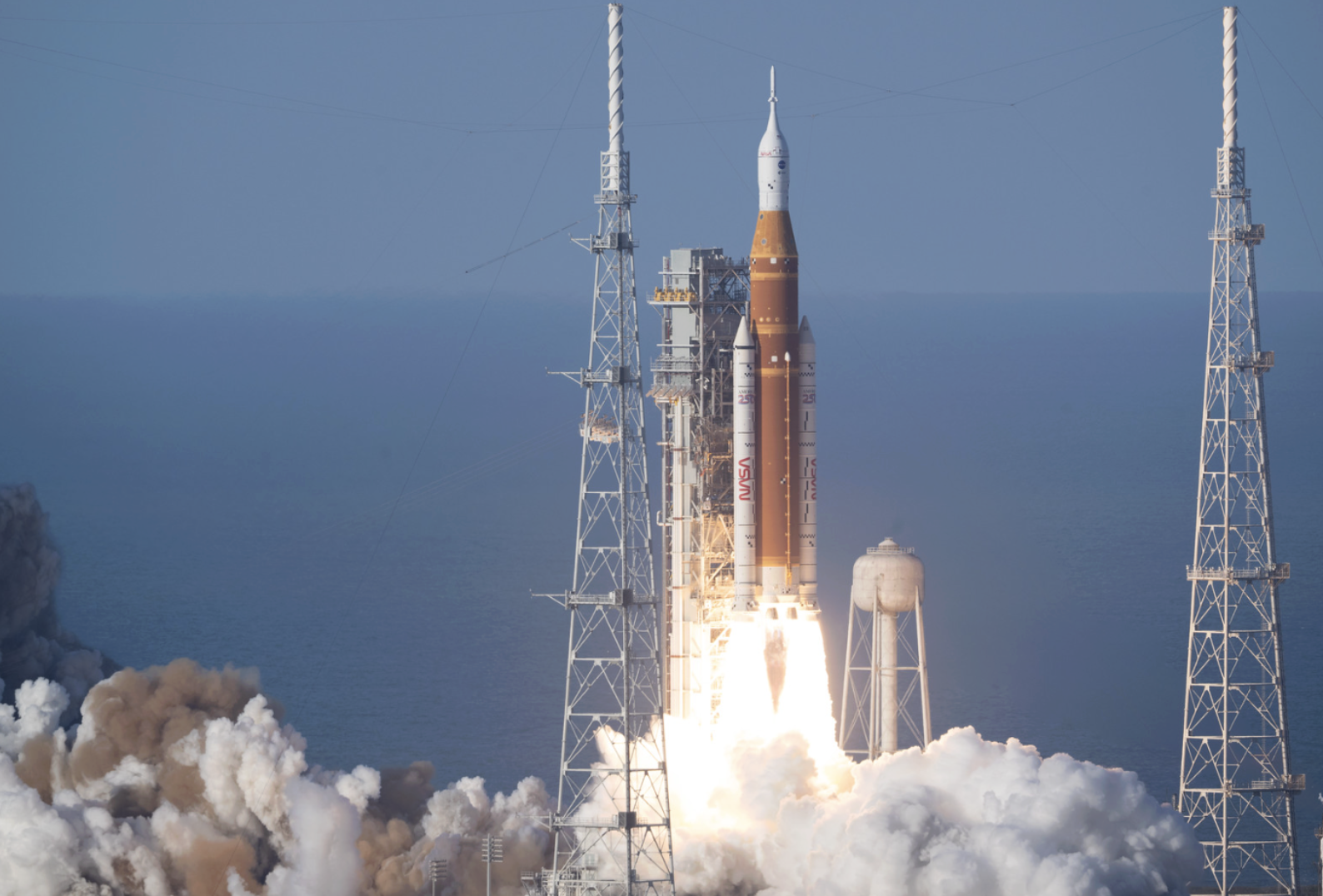
NASA / Contributor
Orion Capsle successfully launching from Kennedy Space Center in Florida on April 1, 2026.