
Bewitching Beldams: The horrors of an aging woman
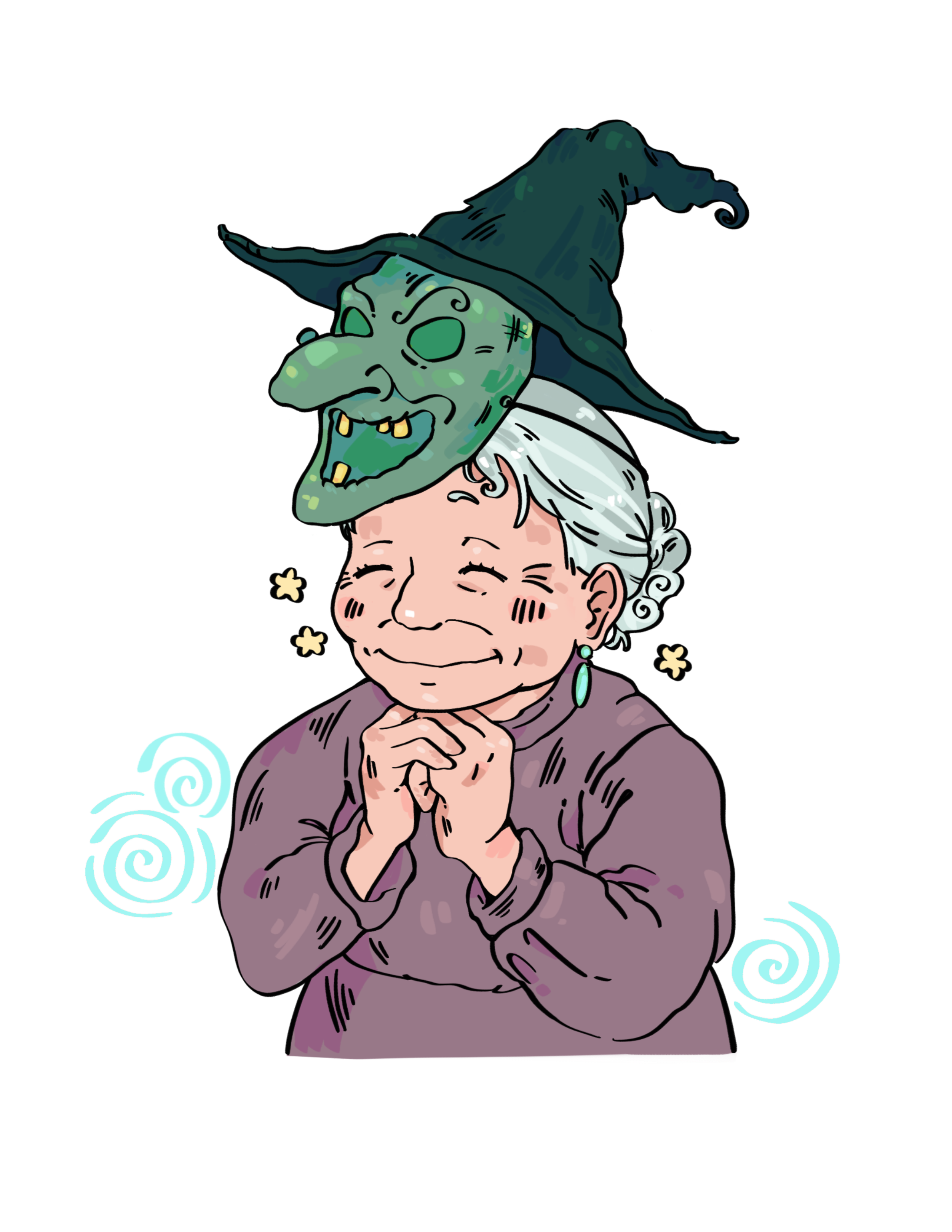
Art by Sara Polster
For as long as the horror genre has been around it has relied on the grotesquely supernatural, over the top and barely believable. Witches, vampires and axe wielding psycho maniacs have graced the silver screen for decades, producing gory scenes that commentate on societal issues like race, class and prejudice. However, in recent years the horror genre as a whole has shifted further away from supernatural sugarcoating to instead confronting real-world issues in a more realistic setting, which has made way for the ‘scary old wench’ character to make its return.
Despite its recent reappearance in horror films, this archetype can be traced back decades ago to the popular phenomenon of ‘hagsploitation’ films. This genre arose in the ’50s and ’60s to provide roles for the aging starlets of Hollywood’s Golden Age. It forced these actresses to play into their maturing bodies, taking up the role of ‘psycho-biddy,’ meaning a psychotic old woman who descends into madness. Antagonists that fall under this stereotype can be seen throughout an abundance of media, including fairy tales like “Hansel and Gretel” and “Snow White”, stories of which reinforced the popularization of the ‘wench’ caricature, and created the first examples of violent and unstable elderly women on screen.
Since then, this stereotype has evolved, using these antagonistic old women as tools to reflect on misogyny and the ever-so-strict beauty standard. The film, “X”, by Ti West contains an old, deteriorating female antagonist named Pearl (Mia Goth), who grows increasingly jealous of a younger character’s beauty and sexuality, jealousy that culminates in resentful rage on her behalf. Pearl’s desire to mimic the behavior of the young characters plays into a taboo subject that is not commonly explored. This concept evokes a certain squeamishness and discomfort in the audience, pushing them to cover their eyes and look away; her character is not seen as beautiful enough for her sexuality to be palatable and therefore her behavior is viewed as twisted and ‘not age appropriate’.
Similar to this, creepy nude old people have been plastered throughout modern media as a form of awkwardly-erotic shock-horror. Like in “The Shining”, “Midsommar” and a plethora of other films the naked bodies of the elderly - specifically elderly women - have been used as props to brew uncomfortability and perplexity among the audience. Exposing intimate parts of their anatomy splayed with wrinkles, sunspots and stretched out skin forces the audience to confront their preconceived notions of what kind of nudity is acceptable on screen. This contrasts with how older men are conveyed in the horror genre. Despite portraying antagonists far more than women, these male villains don't play into sexual or provocative scenes, instead they take on more common traits like physical disfigurements, scary masks or large gaudy weapons in order to evoke fear. Film in general portrays older men with far more grace than older women; the ‘silver fox’ archetype displays how wrinkles and gray hair often make men more attractive, an inverted interpretation than that of women. It is hard to tell whether this trope is effective in criticizing our beauty standard since it plays so heavily into it. These films would not be as terrifying or grotesque if we did not have preestablished biases against female bodies; they in fact rely on our disgust in order to pull our focus, therefore hypocritically feeding into the system they are attempting to condemn.
The contrast between the young heroes and old villains creates a clear divide between good and evil - evilness which is unfortunately defined by the inevitable - aging. The idea of becoming old has seemingly taken over this generation. Anti wrinkle straws, preventative botox and elaborate skincare routines have all been shoved into the mainstream, preying on young women and forcing them to fear the unavoidable. These ideas that society has been pushing causes films like this to hit so close to home for women; displaying a hunched back, decrepit woman as a murderous maniac instills more negative connotations surrounding the idea of aging, forcing the audience to think about what they might become. Though they fit into the ‘good’ now, the idea that they will one day be a part of the ‘evil’ plagues their viewing experience. English teacher Elizabeth Waters reflects on this loss of innocence.
“I think one reason that beauty standards are so important, particularly for women, is because women's sexuality is also really emphasized in our society,” Waters said. “And so I think there's kind of a view of, if you lose that aspect of yourself, you are losing the good.”
Although these movies claim to be criticizing the trivial fears that overwhelm modern society, they rely heavily on perpetrating stereotypes and committing to negative cliches in order to turn their movies into horror movies. The truth is, the only time we see the wrinkly, sagging features of these women in the media is when they are portraying these ‘creatures’, appealing to the perverse disgust we feel surrounding women's aging bodies. Society has brainwashed us into viewing these women as horrifying, making this trope profitable for distributors and entertaining for audiences. Waters highlights the potential consequences following the continued depiction of these caricatures.
“When we engage in stories that use the same trope over and over again, our brains start to believe things about that group because we see the same portrayal over and over again,” Water said. “Subconsciously, we start to say, ‘Oh yeah! these things are linked.’”
The question lies in whether this archetype can be done in a tasteful way that accurately criticizes our gripes surrounding the aging women. Scary old women in the media are not going away anytime soon but the next time their thin wrinkled skin plasters your screen, ask yourself why you find them so terrifying in the first place.